Binary Options for Beginners
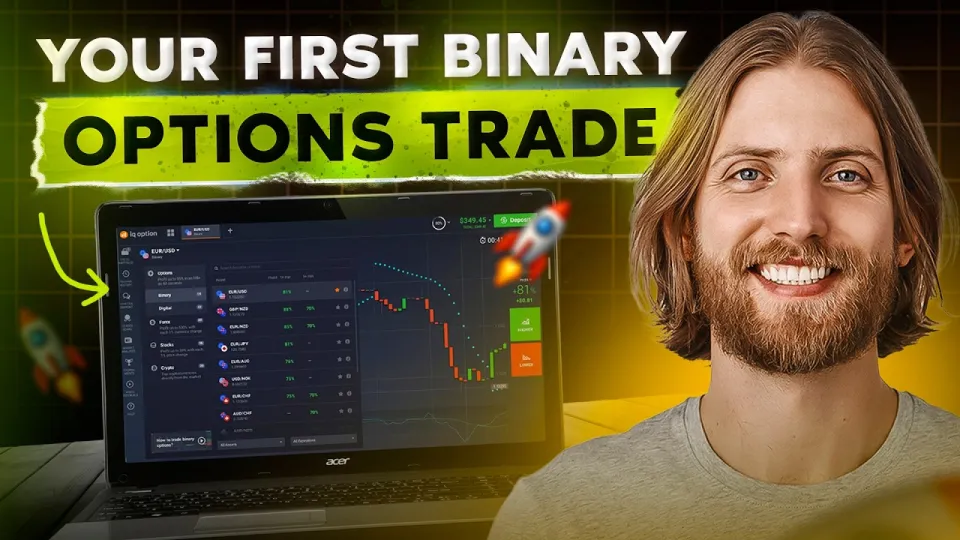
Video: Binary Options | Binary Options Tutorial for Beginners | Where Should You Start?
Binary options are fixed-risk contracts: you predict whether an asset's price will be above or below the current level at a set expiry time, and you either collect a fixed payout or lose your stake. A beginner should start by choosing a regulated-in-your-jurisdiction platform such as Quotex registration, learning one asset and one expiry, and risking no more than 1–2% of the balance per trade before touching real money at size.
What a binary option actually is
A binary option is a contract with exactly two outcomes, which is where the name comes from. You pick an asset (a currency pair, a stock, gold, an index or a crypto pair), a direction (higher or lower than the current price) and an expiry (from 60 seconds up to a day or more on some platforms). When the expiry closes, the platform compares the entry price with the closing price. If your direction was right, you receive the stake back plus a payout, usually quoted as a percentage such as 70%, 80% or up to 95% depending on the asset and expiry. If you were wrong, the entire stake is lost.
That structure has three consequences every beginner must understand before depositing:
- The payout is always smaller than the risk. A 80% payout means a win returns 0.8 of the stake while a loss costs 1.0 of the stake, so you need a win rate above roughly 56% just to break even at that payout.
- There is no partial exit. Unlike spot trading with a stop-loss, you cannot cut a losing binary option short; the stake is committed at entry.
- Time is a variable you choose. A 1-minute expiry and a 4-hour expiry on the same asset are completely different bets, because short expiries are dominated by noise and spread.
Where beginners should start: platform, asset, expiry
The first practical step is picking a platform that fits your country and your payment method, not the one with the flashiest bonus. The video breakdown points to three widely used brokers: Quotex, Pocket Option and Binarium. All three offer a demo account, which is the correct place to spend your first two to four weeks.
A workable starting sequence looks like this:
- Register and open a demo account, not a live one.
- Choose a single liquid asset — EUR/USD or gold are the usual choices because spreads are tight and price action is readable.
- Fix one expiry, for example 5 minutes, and stay with it for at least 100 demo trades so you can actually measure a result.
- Log every trade: asset, direction, expiry, result, and the reason for entry. A spreadsheet is enough.
- Only after a demo sample of 100+ trades with a positive or break-even result should real money enter the picture.
Position sizing and the maths that kills accounts
The single most common beginner error is not a bad strategy, it is stake size. With a fixed payout, a losing streak of five or six trades is statistically normal even with a genuinely good edge. If each trade risks 20% of the balance, six losses in a row takes the account down to roughly 26% of its starting value and recovery becomes mathematically brutal.
A more defensible rule set:
- Risk 1–2% of the balance per trade, never more than 5%.
- Cap daily losses at 5–10% of the balance and stop for the day when hit.
- Treat the payout percentage as part of the odds: a 70% payout needs a much higher win rate than a 90% payout on the same asset.
- Avoid martingale (doubling after a loss). It converts a series of small losses into one account-ending loss.
Reading price before clicking a direction
Binary options are still a price prediction, so the chart work matters more than the platform. Beginners get the most mileage from a small toolkit: support and resistance levels drawn on a higher timeframe, a trend filter such as a moving average, and one momentum or oscillator indicator for confirmation. Three indicators stacked on a 1-minute chart produce contradictory signals and hesitation, which is worse than one clean setup.
Practical habits that separate disciplined beginners from gamblers:
- Trade only during liquid sessions — the London and New York overlap is where EUR/USD and gold actually move.
- Skip the first minutes after a major news release unless your plan explicitly covers news trading; spreads widen and spikes can hit both directions.
- Write down the setup in advance (for example: price rejects resistance, trend is down, enter lower with a 5-minute expiry) and take only that setup.
- Review the log weekly and cut whatever setup has the worst record.
Typical beginner questions and doubts
Most of the doubt around binary options comes down to three things: whether the platforms pay out, whether a strategy can survive the payout maths, and whether the activity is legal where the reader lives. On payouts, the honest answer is that withdrawals depend on the broker's verification process — identity documents, payment method matching and minimum withdrawal thresholds — so complete verification before trading, not after a winning streak.
On legality, binary options are restricted for retail clients in the European Union and banned for retail in the United Kingdom, and several other regulators have taken similar positions. Rules differ by country and change over time, so check your local regulator before opening an account. On strategy, no indicator removes the structural cost of the payout; the only lever a trader controls is trade selection and stake size. Viewers also frequently ask about VPN use and bonus offers — both deserve caution, because bonuses usually carry turnover conditions that lock withdrawals, and using a VPN to bypass a platform's regional restrictions can void an account.
Platform and tool links from the breakdown
These are the resources referenced in the video walkthrough, listed for convenience:
- Quotex — https://dakaklik.com/_quotex?creative_id=WzzpYsjS3ps
- Pocket Option — https://dakaklik.com/_PocketOption?creative_id=WzzpYsjS3ps
- Binarium — https://dakaklik.com/_Binarium?creative_id=WzzpYsjS3ps
- NordVPN — https://dakatop.link/Nord_us?creative_id=WzzpYsjS3ps
Bottom line
Binary options reward preparation and punish impulse: fixed payouts mean the maths has to be respected, and short expiries mean discipline has to be absolute. Start on a demo account with one asset and one expiry, risk 1–2% per trade, keep a written log, and verify your account before you need to withdraw. The video breakdown on the Binary options tutorial for beginners channel walks through the same starting sequence with the platform interfaces on screen, which is useful once you have the rules straight. When you are ready to open an account, you can start with Quotex registration and keep the first deposits small.
Key takeaways
- A binary option is an all-or-nothing contract: you either receive a fixed payout (typically 70–95% of the stake) or lose the entire stake.
- The three platforms featured in the video breakdown are Quotex, Pocket Option and Binarium, each accessible via registration links.
- Typical binary option expiries range from 60 seconds to several hours, which makes trade frequency the main cost driver.
- Risking more than 1–2% of the account balance per trade is the fastest route to ruin for a beginner.
- Binary options are banned for retail clients in the EU, the UK and several other jurisdictions, so check local rules first.
Source: Binary Options | Binary Options Tutorial for Beginners | Where Should You Start? · Markdown version
Questions & answers
How much money do I need to start trading binary options?
Many platforms accept minimum deposits in the range of $10 to $50, but the deposit size matters less than the stake size relative to it. Starting with a small balance and risking 1–2% per trade keeps a normal losing streak survivable while you build a track record on demo first.
Can I withdraw profits from Quotex, Pocket Option or Binarium without problems?
Withdrawals generally depend on completing identity verification and using a payment method in your own name. Submit documents before you start trading, check the minimum withdrawal amount and processing times, and be careful with deposit bonuses, because their turnover conditions can block withdrawals until a large trading volume is reached.
Is a 1-minute expiry better than a longer one for beginners?
No. Very short expiries are dominated by random noise and the spread, so results say more about luck than skill. A 5-minute to 1-hour expiry on a liquid asset such as EUR/USD or gold gives price action room to develop and makes your trade log far more informative.
Are binary options legal in my country?
It depends on the jurisdiction: retail binary options are banned in the UK and restricted across the EU, while rules in other regions vary and change over time. Check your local financial regulator before registering, and note that using a VPN to bypass a platform's regional restrictions can lead to a closed account.